Somewhere in your feed you’ve probably seen it: a row of people lying on a beach in Japan, buried up to the neck in dark sand, just their heads and a towel showing. It looks like a spa treatment and a magic trick at the same time. It has a name—sunamushi onsen—and this guide covers what it is, how a visit actually goes, and where you can try one.
The short answer
Sunamushi onsen (砂蒸し温泉) means “steam-sand hot spring.” Instead of soaking in hot water, you lie on a bed of sand that hot-spring water has warmed from below, and an attendant shovels more of that sand over you until you’re covered to the neck. Japan’s tourism board describes the setup plainly: the sand is “naturally heated by the hot water flowing underneath” the beach, and the practice has “been popular for more than 300 years.”
The two best-known places for it are Ibusuki, on the coast at the southern tip of Kagoshima, and the city of Beppu in Oita. Ibusuki in particular is built around the sand: Japan’s tourism board calls it a resort “well known for its excellent seaside location and sunamushi hot sand baths.”
How a sand bath actually goes
The sequence is short, and it’s much the same at both towns.
You check in, change out of your clothes, and put on a light cotton yukata—this is what you lie in, typically over bare skin. You walk out to the sand area, lie down on your back where the attendant points, and rest your head on a small wooden pillow or a folded towel. The attendant then buries you, packing warm sand over your legs, torso, and arms. At Ibusuki, Japan’s tourism board’s guidance is to “lay buried in the sand for about 10 minutes,” and other sand baths are similar. It is genuinely hot, and the weight of the sand is heavy across the chest, so the time is deliberately short; when you’ve had enough, you sit up, and the sand slides off.
From there you go back inside, shower the sand out of your hair and skin, and finish with a normal soak in the facility’s indoor hot spring. That last step runs on the usual bathing-area rules, so our beginner’s guide to Japanese baths covers everything from the shower onward.
Being packed in warm sand can feel intense quickly, and sitting up fast after ten minutes of heat leaves some bathers light-headed. Tell the attendant if you want out early, rise slowly, and have water ready for afterward. If you're pregnant or managing a heart condition or blood pressure, ask the facility first.
Where you’ll find one
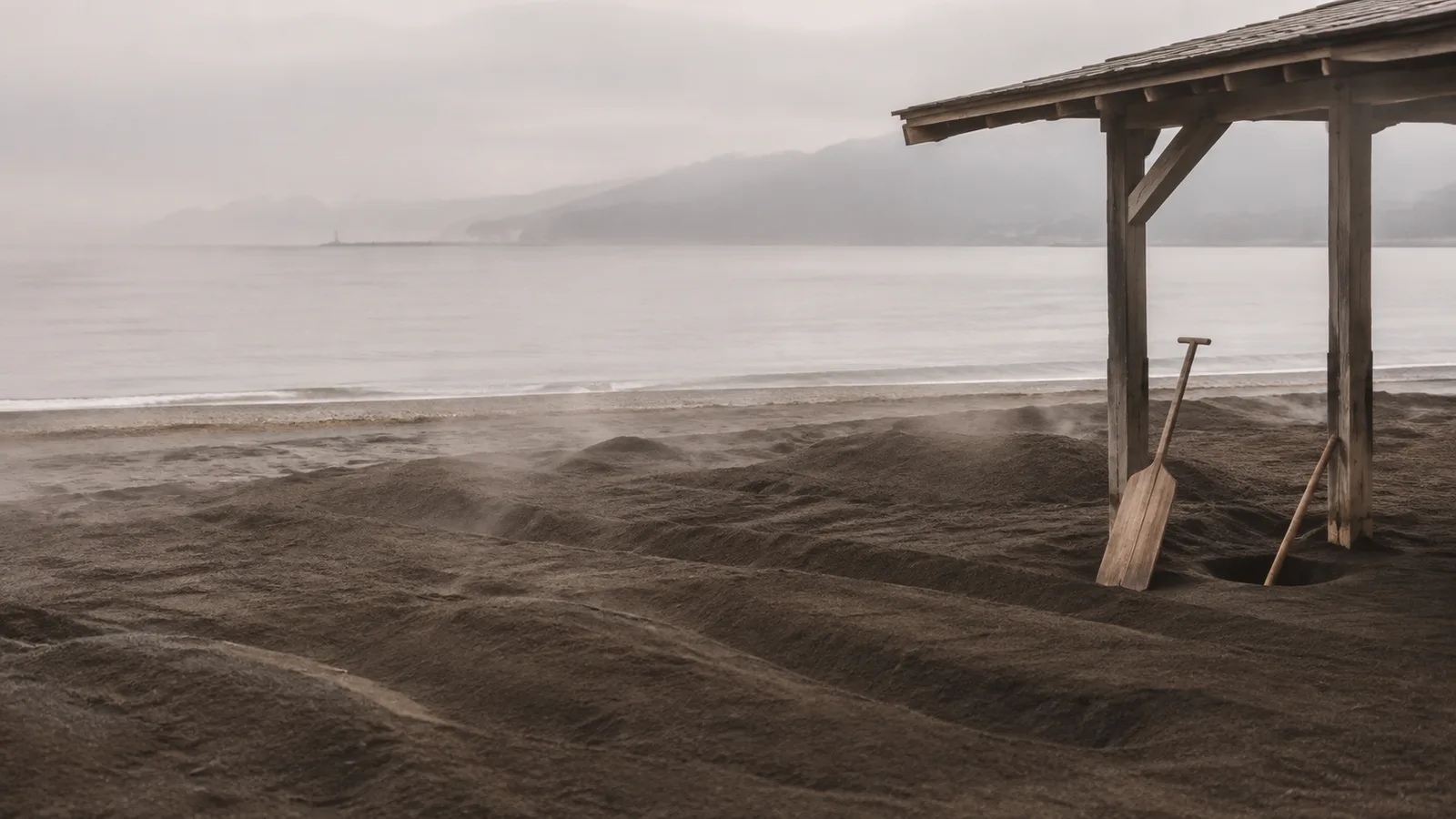
Ibusuki, Kagoshima. The public sand-bath hall here sits right on the shore. When the weather is fine and the tide is low, the baths are dug on the open beach near the water; when the tide is high or the weather turns, the same experience moves to a roofed, all-weather sand pit on the same site. So it runs year-round, apart from short maintenance closures in summer and winter, but whether you get the postcard version on the open beach depends on the day. The hall keeps long daily hours with a short break around midday on weekdays, and the yukata is a rental included when you pay; towels are a small extra rental. It’s reachable as a day trip from Kagoshima: about an hour on the JR Ibusukimakurazaki Line to Ibusuki Station, then a short bus ride or a walk of around 20 minutes.
Beppu, Oita. The historic option is Takegawara Onsen, a bathhouse founded in 1879 (the current landmark building dates from 1938), a ten-minute walk from Beppu Station, where the sand bath is indoors. The sand bath needs a reservation, and Beppu’s city information says it’s taken only at the reception desk in person—no phone or email booking—so it’s worth going early to put your name down.
You don’t need a tour to do this—you can turn up at the Ibusuki hall and pay a small entry fee on the day. What’s genuinely fiddly without a car is the Kagoshima–Ibusuki logistics: train times, the connection at the other end, fitting it into one day. If you’d rather have that arranged for you, this full-day tour leaves Kagoshima in the morning and pairs the hot sand bath with a bonito-flake factory stop. One thing to weigh before you book: it’s a private tour, so it costs a good deal more than going under your own steam—you’re paying for the day to be organized around you, not for access to the sand. Check the itinerary, what’s included, and the current departure dates on the booking page.
See the Kagoshima–Ibusuki sand-bath day tour on KlookThis page contains affiliate links. If you book through them, AHH, JAPAN may earn a commission at no extra cost to you.
What about tattoos?
The sand itself isn’t usually the issue—you’re covered in a yukata, so skin isn’t really on show. The rinse-off and soak afterward, though, happen in a normal indoor onsen, and that bath follows the facility’s tattoo policy like any other. Policies vary from place to place, so if you have a tattoo, check the specific hall’s rules before you go. Our guide to tattoos at a Japanese onsen walks through how to check and what your options are.
The sand bath is usually fine, but the hot-spring bath you use to rinse off afterward may not allow visible tattoos. Confirm the facility's policy on its official website before you visit.
What you don’t need to bring
Almost nothing. The yukata you lie in is handed to you at the counter, and towels can be rented on site, so a sand bath doesn’t call for any special kit—our onsen packing guide is more than enough. You also don’t need to build a whole trip around it: both Ibusuki and Beppu take day visitors for a modest fee, so an overnight stay or a premium package is a choice, not a requirement. If you are planning a longer hot-spring trip anyway, our guide to onsen towns in Japan covers how these towns are laid out and how to plan a first visit.
Ten minutes under warm sand, then a rinse. Ahh…
Curious about YUGE, the character guiding you through this site? Meet YUGE—and find a few small ways to bring that calm home—on the YUGE page.
Some editorial images in this article were AI-generated and do not depict specific venues.
Sources
- Japan National Tourism Organization — Ibusuki Hot Steam Sand Baths
- Japan National Tourism Organization — Ibusuki Onsen
- Japan National Tourism Organization — Takegawara Onsen
- Ibusuki Sunamushi Kaikan Saraku — Official Site
- Ibusuki City Tourism Association — Sunamushi Kaikan Saraku
- Beppu City Official — Takegawara Onsen