If your trip is centered on Tokyo and a hot-spring soak is on your list, you may be weighing whether it’s worth giving up a whole day to reach a spa town in the mountains. Often it isn’t necessary. This guide covers where hot-spring water surfaces in and around Tokyo, the sorts of venues you can bathe at, how drop-in visits work, and a few things to confirm before you head out.
The short answer
You can bathe in genuine hot-spring water without leaving the city. The Official Tokyo Travel Guide, published by the Tokyo Convention & Visitors Bureau, notes that although people usually suggest Hakone or Atami in nearby prefectures, “you can take a dip without leaving the city,” pointing to spots in the central wards, out toward the western hills, and on the Izu Islands.
That makes it a very different outing from a stay in a spa town built around its springs, where the place itself is the reason you came and you sleep there for a night or two. If that kind of trip is what you have in mind, our guide to onsen towns covers it. Within Tokyo, a bath is usually a few hours carved out of a sightseeing day.
What “onsen” means here
The word is defined by Japan’s Hot Spring Act, which sets thresholds for source temperature and for dissolved minerals; our guide to sento, onsen, and super sento explains how that legal line separates a hot spring from a plain heated bathhouse. Certain Tokyo facilities tap qualifying water from beneath the city. Others bring it in from a source in another prefecture and say so on their websites, so it’s worth reading the fine print if provenance matters to you.
A distinctly local type is kuroyu, or black hot water — a naturally dark spring water that the Tokyo Travel Guide calls “a kind of natural hot spring around Tokyo.” It surfaces at unshowy bathhouses in the southern wards, especially near Kamata Station in Ota City. The same guide describes central Tokyo’s hot-spring water more broadly as rich in sodium chloride and, in a familiar turn of phrase, “known to help ease muscle pain, joint stiffness, cuts, burns, and colds.” That’s traditional wording about the water, not a health claim.
Three kinds of places to bathe
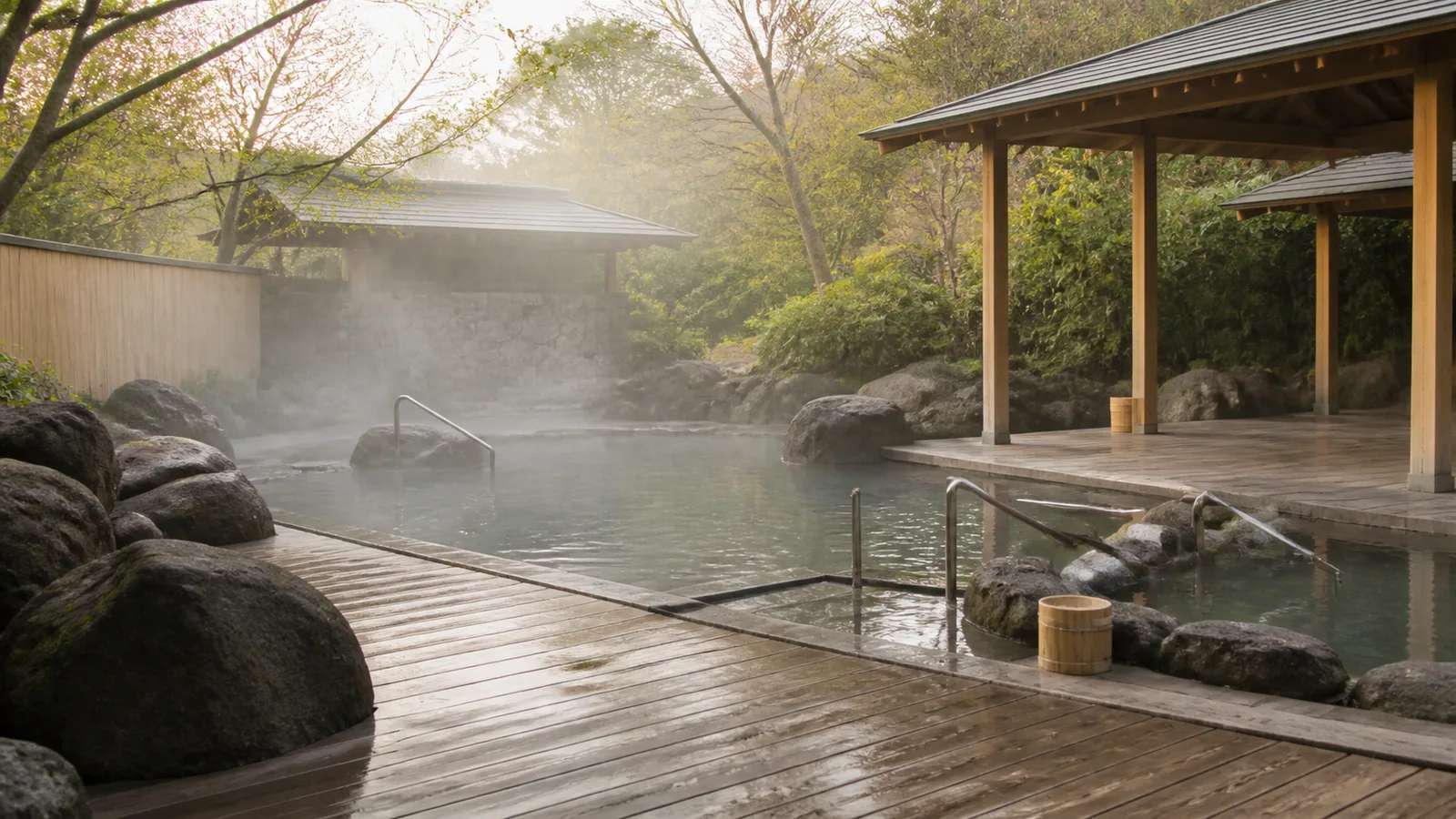
A Tokyo hot-spring visit usually takes one of three forms.
A large day-bathing complex with real spring water. These pair several indoor and open-air baths with saunas, lounging areas, and food, and are meant for an easy half-day. The Tokyo Travel Guide singles out Saya no Yudokoro in Itabashi City, which it says draws a natural spring with a “distinctive greenish-brown color,” and Thermae Yu in Shinjuku’s Kabukicho district, which brings in spring water daily from Nakaizu in Shizuoka.
An everyday bathhouse that sits on a spring. Some neighborhood sento happen to draw water that qualifies as onsen, the Kamata-area kuroyu baths among them. These are small and unfussy, and a visit unfolds much like any sento visit: pay at the counter, undress, wash, soak.
A bath on the way to somewhere in the hills. Okutama Onsen Moegi-no-Yu and Keio Takaosan Onsen Gokuraku-yu attach a soak to a day among the mountains west of the city, and the Izu Islands have springs of their own. These involve real travel time but remain part of Tokyo.
Overnight stays are rarely required. Most of these places are built for drop-in bathing, and some, such as Yumori no Sato in Chofu, run a free shuttle bus from Musashi-Sakai Station. Opening hours, admission prices, and whether a place is still trading can all shift, so pull up the specific facility’s own site before you build a day around it. If you’re still budgeting the trip, see what a first onsen trip actually costs—a neighborhood sento, a day-trip facility like these, and a ryokan stay are priced on three different systems.
Getting around to a Tokyo bath
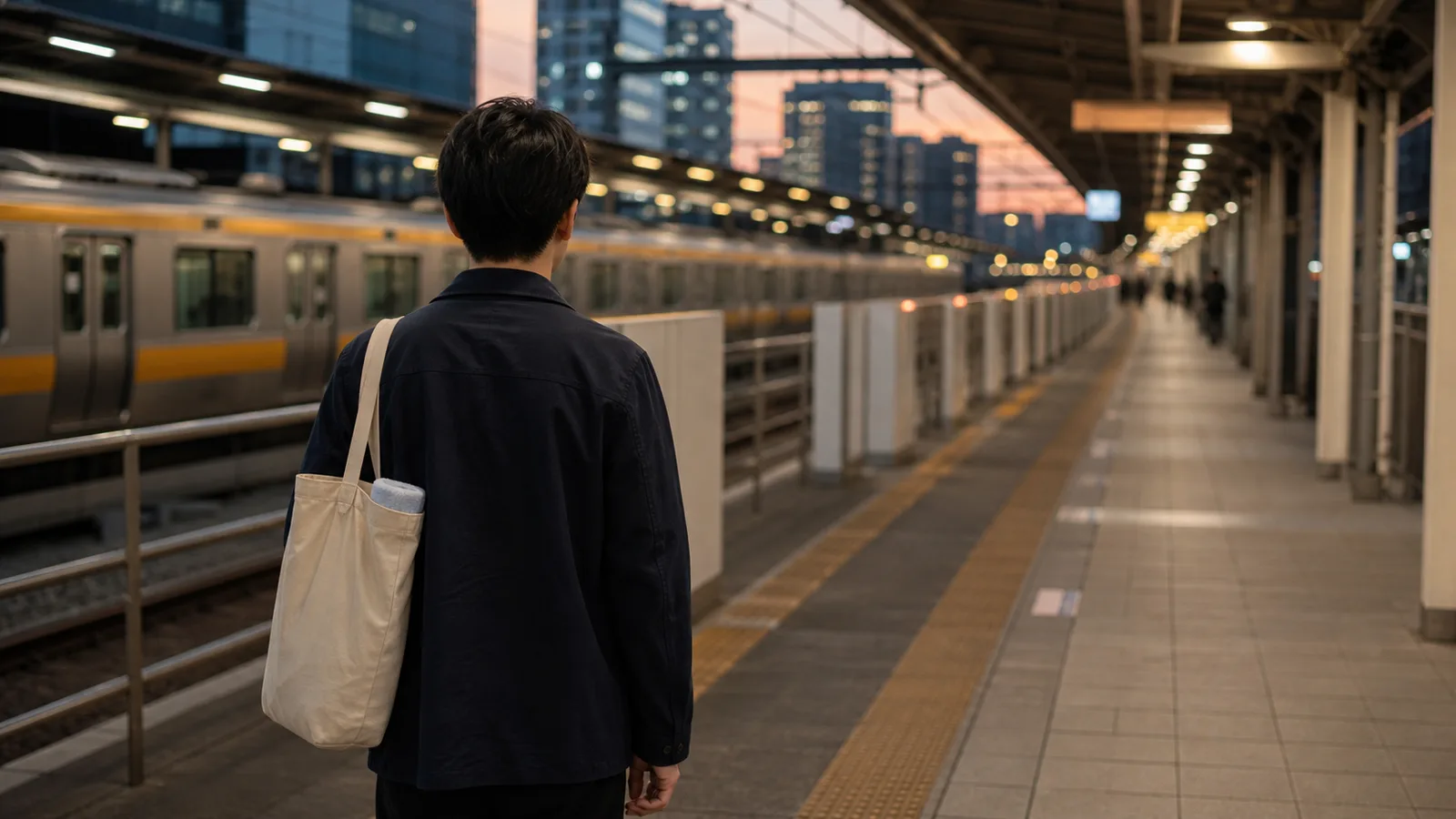
Almost every in-city facility sits on the regular train and subway map. Saya no Yudokoro is roughly a ten-minute walk from Shimura-sakaue on the Mita subway line; Thermae Yu sits in central Shinjuku, in the Kabukicho area. The hill venues near Okutama or Mt. Takao mean a longer ride out on the Chuo or Keio lines, so treat those as the day’s main plan rather than a detour. Timetables, fares, and shuttle arrangements shift, so confirm them shortly beforehand. For lighter crowds, the Tokyo Travel Guide suggests a weekday outside holiday periods.
Etiquette and tattoos
The washing-and-soaking sequence is the standard Japanese one, and our step-by-step etiquette guide walks through it: no swimwear, gender-separated baths, a thorough wash before you get in, hair kept up, and the small towel left out of the water.
Some Tokyo facilities welcome visible tattoos, some ask that they be covered, and some don't admit them at all. It is decided facility by facility, so check the specific place first, or pick one that already describes itself as tattoo-friendly.
The Tokyo Travel Guide’s own summary is that most baths ban or restrict tattoos and that the safe move is to “ask the establishment before booking.” Japan’s tourism board notes that more onsen now allow tattoos than in the past, and as a large city Tokyo has a comparatively wide choice, though this differs between venues and can change. For how those policies usually split, see our guide to visiting a Japanese onsen with tattoos.
Any lines you read about what a spring is “good for” are folklore, not medical information. Practical points count for more: keep soaks brief, sip water, save alcohol for afterward, and clear it with a doctor first if strong heat is a concern for you.
One concrete option, if you want the visit settled before you arrive: a day-use complex on Tokyo Bay that stays open around the clock and brings its water in from Hakone and Yugawara. Indoor and outdoor baths, plus a rooftop foot bath looking over the city. It’s the “large day-bathing complex” shape described above rather than a neighbourhood bathhouse—and tattoos are only admitted if covered with the facility’s cover sheets (max 11cm × 20cm each), so check the section below if that applies to you. Two more rules from its official tattoo page (checked September 28, 2026): tell the front desk about the tattoo when you arrive, because guests who don’t are asked to leave on the spot, and keep the stickers on for your whole time in the building, not just in the bath. Two conditions on this ticket, from Klook’s listing (checked September 28, 2026): guests with tattoos can’t use it, even though the facility itself admits covered tattoos, and it’s valid only for visitors to Japan. If you have a tattoo, skip the ticket and pay at the door instead.
See the Toyosu day-use onsen on KlookThis page contains affiliate links. If you book through them, AHH, JAPAN may earn a commission at no extra cost to you.
Planning your visit
- Fix the shape of the outing. A half-day at a central complex is a different plan from a full day toward the western hills. If you’re weighing the central, half-day option, our guide to choosing between Tokyo’s half-day onsen compares three of them directly.
- Open the venue’s own website. Confirm it’s trading, then note today’s hours, admission, and the nearest station.
- Pack a small towel if you have one, though rentals are usual.
In closing
A Tokyo onsen stays modest in scale: spring water rises under parts of the city and is trucked in daily elsewhere, most venues happily take drop-ins for an hour or two, and the etiquette doesn’t shift. Choose a spot, read its official page for what’s current, and let a warm, quiet stretch sit in the middle of a normal city day.
Take it slow. Ahh…
Curious about YUGE, the character guiding you through this site? Meet YUGE—and find a few small ways to bring that calm home—on the YUGE page.
Some editorial images in this article were AI-generated and do not depict specific venues.
Sources
- GO TOKYO (Tokyo Convention & Visitors Bureau) — Hot Springs in Tokyo
- GO TOKYO (Tokyo Convention & Visitors Bureau) — Jump Right In: A Guide to Tokyo Onsen
- Japanese Law Translation (Ministry of Justice) — Hot Spring Act (Act No. 125 of 1948), Article 2
- Japan National Tourism Organization — Hot Springs in Japan
- Klook — Toyosu Manyo Club ticket listing (conditions)
- Tokyo Toyosu Manyo Club — Tattoo policy (Japanese)