You don’t want to sleep in Hakone—you just want a few hours in a hot spring before the train back to Tokyo. But every search result seems to assume you’re booking a room, the facility’s own site is in Japanese, and you can’t tell if you need to reserve a spot or if you can just show up. The short version: for most day-use baths near Tokyo, you don’t “book” at all in the usual sense—you show up and pay. There’s just one wrinkle worth knowing about before you build your day around it, and one part of the process that does have an English option.
Do you actually need to book ahead?
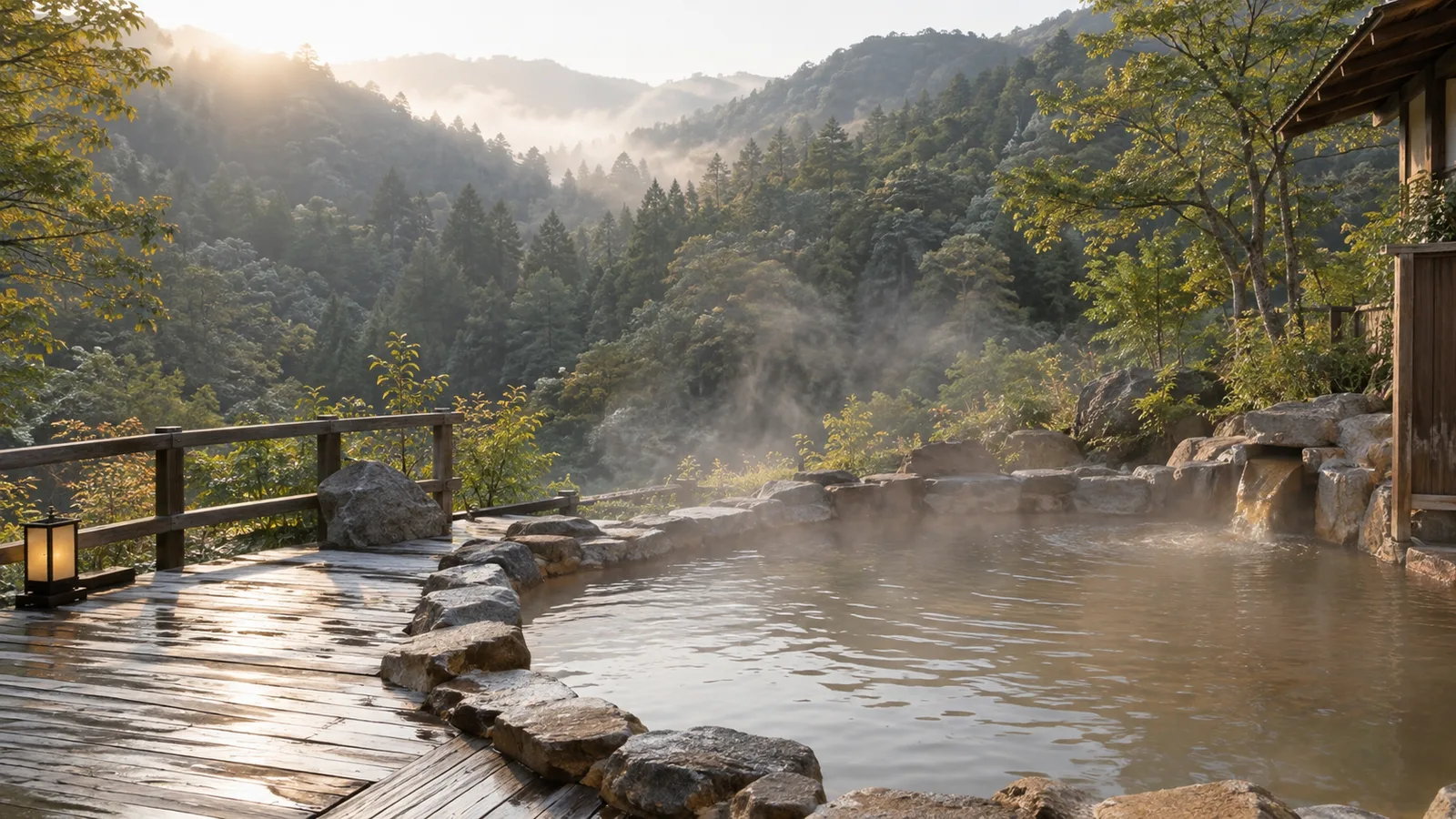
Most day-use hot spring facilities near Tokyo run on a walk-in basis, not a reservation system. Tenseien, a day-use bathhouse in Hakone Yumoto, states plainly on its own site that it doesn’t take reservations at all—you arrive, pay at the door, and go in. That’s not unusual for this kind of facility. For a single soak in the shared baths, showing up is the normal way to do it.
The catch is what happens when a facility is busy. Tenseien is explicit about this too: on a crowded weekend, it can turn walk-in guests away once the baths reach capacity, and because it isn’t running a reservation system in the first place, there’s no way to call ahead and hold a spot. Nothing on the facility’s own site suggests there’s a way around that on the single busiest days—not calling ahead, not buying online, nothing. The real risk to plan around is a packed Saturday afternoon, and the honest fix for that is timing: go on a weekday, or arrive earlier in the day, rather than assuming any booking channel can promise a spot when the baths are simply full.
What buying the ticket online actually solves
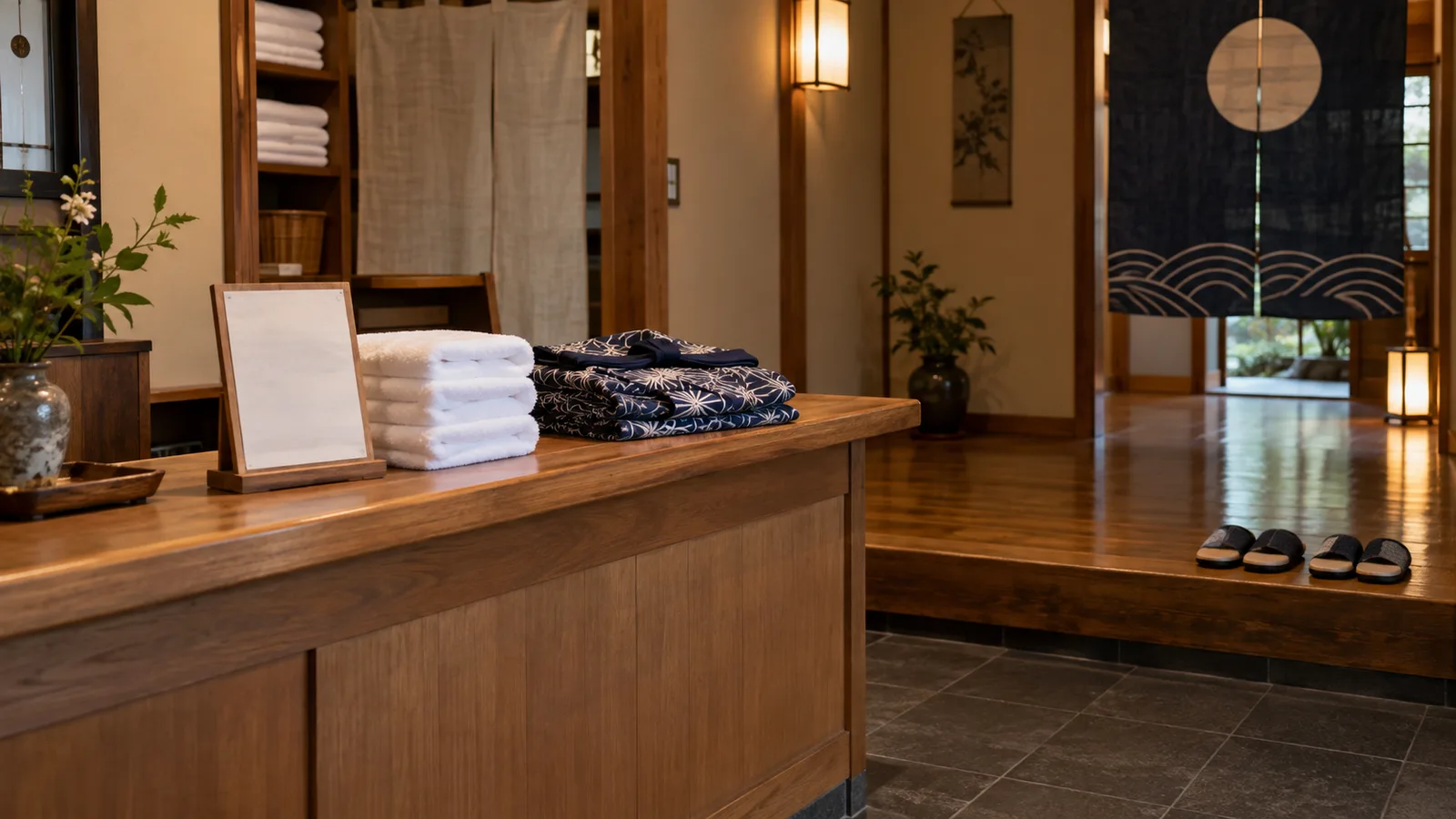
What an advance ticket does solve is everything else about walking up to a Japanese-only front desk. Since Tenseien’s day-use entry doesn’t take advance reservations of any kind, the English-language alternative is buying general admission through a platform like KKday before you leave Tokyo, so the price and the paperwork are settled ahead of time instead of at the counter.
Tenseien is the clearest example: its own day-use system doesn’t take advance reservations, but the general admission ticket on KKday is sold in English, from wherever you are, days before your trip. It’s the same bath, the same walk-in facility—admission still isn’t guaranteed when the baths are full, so the ticket doesn’t change your odds on a packed weekend, but it does mean the price is already settled and there’s no on-the-spot fee schedule to puzzle through in Japanese. Check the ticket’s validity window and cancellation terms along with the current price and hours on the booking page before you go. One condition to know before you buy: Tenseien’s official day-use page turns away anyone with a tattoo, or even a tattoo-style sticker (checked September 28, 2026), so this ticket won’t work if you have one.
See the Hakone Yumoto day-use ticket on KKdayThis page contains affiliate links. If you book through them, AHH, JAPAN may earn a commission at no extra cost to you.
This isn’t the only facility set up this way, and it isn’t the only route in—plenty of day-trippers just show up and pay at the door, and it works out fine, especially on a weekday. Buying ahead is worth it if you’d rather not puzzle through a Japanese-only price board on arrival; it isn’t a way to skip the risk of a full house on a busy day, because nothing is.
What the ticket does and doesn’t cover
General admission gets you into the shared baths—it doesn't reserve you a room, a time slot, or a locker. If a private bath is the actual reason for the trip, that's a different booking arranged at the facility itself, not something an admission ticket covers.
It’s worth being precise about what buying ahead of time actually gets you. The ticket gets you in the door and into the shared, gender-separated baths—that’s it. It doesn’t hold you a locker, a specific bathing time, or a private tub. If a reserved private bath (kashikiri-buro) is what you’re actually picturing, our guide to booking one covers that separately, since it’s arranged and paid for at the property rather than through a general admission ticket like this one.
Picking a destination and getting there
Hakone is the easiest day trip to plan around, mainly because the Odakyu Romancecar runs a direct limited express from Shinjuku to Hakone-Yumoto in about 80 minutes. That convenience comes with its own small booking step: the Romancecar requires a reserved seat, sold separately from the base fare, and Odakyu sells that seat reservation in English through its own online ticket site—worth doing before you leave rather than gambling on a same-day seat during a busy weekend. Other hot spring towns within a couple of hours of Tokyo, including Kinugawa Onsen and parts of the Izu Peninsula, follow the same basic pattern of walk-in bathhouses with the occasional reservation-only exception, though train times and transfer counts vary by destination. If you haven’t settled on a town yet, our guides to Japan’s onsen towns and which one suits a first trip can help you choose.
What you don’t need
You don’t need to speak Japanese or decode a Japanese-only price board at the door—an English-language ticket bought in advance settles the price and the language before you leave Tokyo, even at a facility whose day-use entry doesn’t take advance reservations of any kind. And you don’t need to book a private bath to have a real onsen day out. General admission to the shared baths is the ordinary way people do this, not a downgrade from the “real” version.
In closing
The booking question for a day trip mostly comes down to one thing: this isn’t a reservation in the usual sense, because places like Tenseien don’t run one—it’s a choice between paying at a Japanese-only counter on arrival and settling the same charge in English before you go. Neither one changes your odds on the single most crowded days, so the real safeguard is timing your visit, not which way you pay. Once that’s sorted, the rest of the day—the train, the bath, the trip home—stops being something you have to figure out in Japanese.
A ticket in hand before the train even leaves. Ahh…
If you’re still weighing how much a day like this costs against a full overnight stay, see what a first onsen trip actually costs. And if a day trip turns out not to be enough once you’re there, booking a ryokan in English covers the overnight version of the same problem.
Some editorial images in this article were AI-generated and do not depict specific venues.