You’ve picked a ryokan, or at least narrowed it down, and now you’re staring at a booking form that’s either half in Japanese or vague about what you’re actually reserving. Is this site legitimate? Will anyone answer if you email in English? What does “plan” mean, and why does the room seem to come with dinner whether you want it or not? None of that is you overthinking it—a ryokan reservation really does work differently from a hotel one, and the difference is exactly where most first-time bookings go wrong.

The three ways to actually book one
There are really only three routes into a ryokan reservation, and they’re not interchangeable.
An English-language booking platform is the most straightforward for a first stay. Japanican, run by the travel agency JTB, operates a full English site with English confirmation emails, and Rakuten Travel—one of Japan’s largest hotel booking platforms—runs an English version alongside its Japanese one (see our walkthrough of actually booking on Rakuten Travel for the guest-info fields that trip up overseas guests). Both let you search, see a price, and get instant confirmation without writing a word of Japanese.
Going direct, through the ryokan’s own website, by email, or by phone, is the second route, and it’s the one worth considering if a specific property is what you want rather than “a ryokan in this town.” The trade-off is that support varies by property: some ryokan run their own English booking page, and many will answer a plain English email even without one. Others, particularly smaller or long-established inns, genuinely don’t have an English phone line and won’t take a booking over the phone in anything but Japanese.
A travel agent, or an agency site built specifically around ryokan (rather than hotels generally), is the third option, and it earns its keep for the properties that fall outside the first two: rural inns with no online booking at all, where someone still has to call ahead in Japanese on your behalf.
To see the first route in practice: YuYu Hakone, a hot-spring ryokan near Lake Ashi, guarantees private open-air onsen use to every guest and lists itself on English-language platforms including Klook—the kind of listing this guide is describing. It isn’t the only ryokan set up this way, and if it’s unavailable for your dates, that’s the ordinary outcome of a small, limited-room property, not a sign that English booking generally doesn’t work.
See YuYu Hakone on KlookThis page contains affiliate links. If you book through them, AHH, JAPAN may earn a commission at no extra cost to you.
What “plan” actually means on the booking page
This is the part that trips up guests coming from hotel sites. A ryokan rate is usually built around a meal plan, not just a room. The standard one is often labeled something like “two meals included” or “one night, two meals” (the Japanese term is ippaku-nishoku): a kaiseki dinner the evening you arrive and a Japanese breakfast the next morning, priced per person rather than per room. A room-only plan, without meals, exists at some properties but not all of them—at many traditional ryokan, serving dinner is central enough to the stay that a meal-free rate simply isn’t offered. If you specifically want room-only, check the plan details on the listing before you book, or ask the property directly if it isn’t listed as an option.
Why check-in has a set time, and why that matters for your itinerary
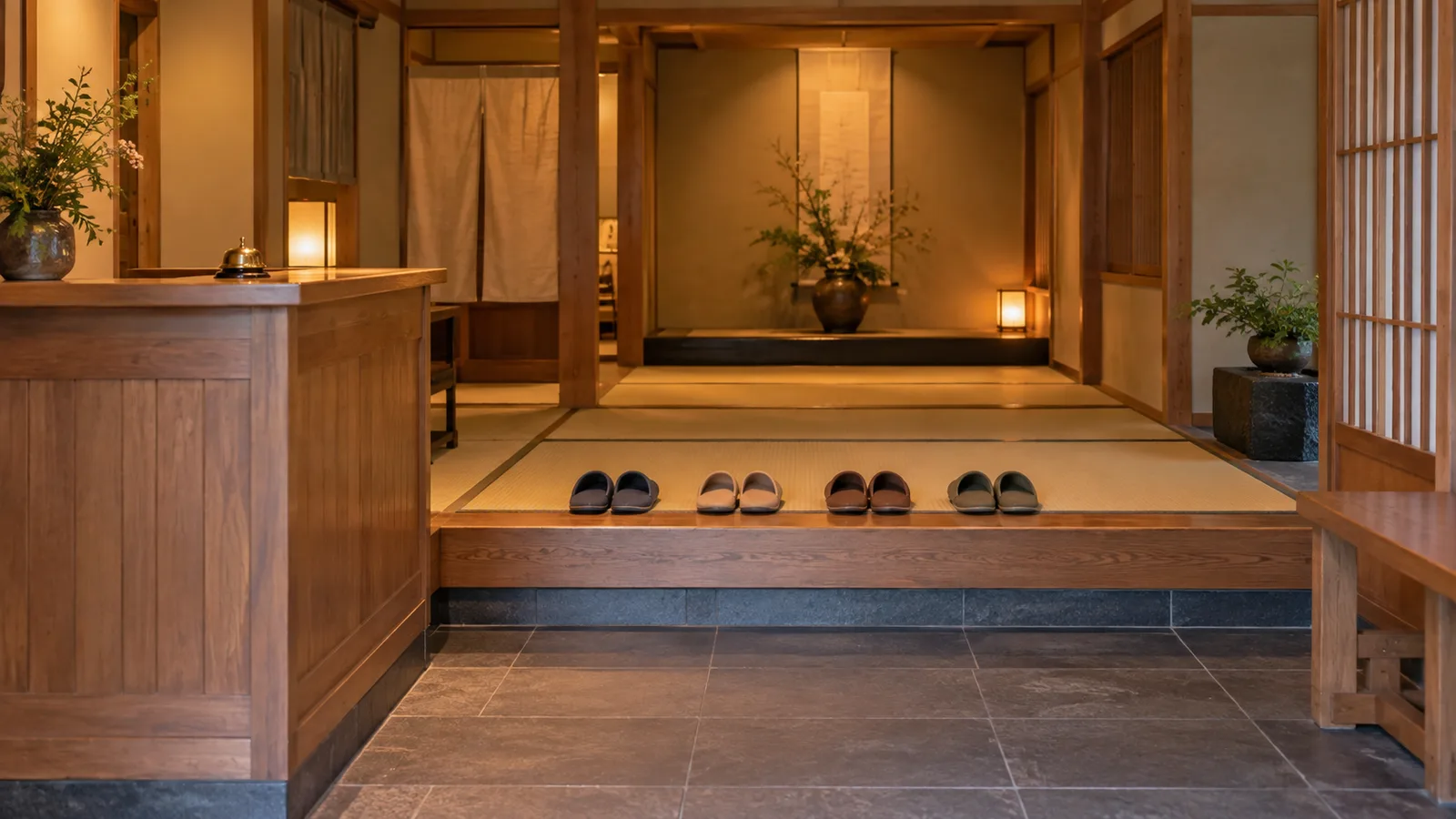
Check-in typically opens around 3 p.m., with dinner served around 6 or 7 p.m. That’s not a suggestion you can casually push back the way you might a hotel’s front desk—the kitchen is preparing a multi-course dinner for a specific number of guests at a specific time, so a very late arrival can mean a rushed meal or, at some properties, missing the seating altogether. If your travel day involves a train connection, a day trip, or anything that could run long, build in enough buffer to reach the ryokan comfortably before dinner rather than aiming to arrive right as it starts.
One more thing every foreign guest should expect at check-in: under Japan’s hotel business regulations, properties are required to check ID and record the nationality and passport number of any guest without a Japanese address in the guest register, so have your passport ready at the front desk rather than packed away.
A number of smaller, independent inns don't have an English booking page and won't take an English phone call either. That's not a sign the property is closed to foreign guests—it usually means you'll need a travel agent, a ryokan-specific booking site, or someone who can call in Japanese on your behalf.
What you don’t need
You don’t need fluent Japanese to book most mid-range and upscale ryokan. A short, plain email in English is often enough, and that’s exactly what English-language platforms and JTB’s own Japanican site exist to make unnecessary in the first place. Save the travel agent for the properties that actually require it—the smaller, phone-only inns without an English option—rather than defaulting to one for every booking.
The one thing you can’t shortcut is lead time. Same-day reservations aren’t common practice at a ryokan, since the kitchen needs advance notice to prepare that evening’s meal. Book at least a few days out, and mention any dietary restrictions when you do, rather than at check-in.
In closing
Booking a ryokan in English isn’t guesswork once you know which of the three routes fits the property you want, and once “plan” and a fixed check-in time stop being surprises. Most of it comes down to matching the property to the right channel—and building your travel day around a check-in you can actually make on time.
A reservation confirmed in a language you can read. Ahh…
Once the room is booked, our guides to what a ryokan stay actually includes and what shows up at that included dinner cover what to expect once you arrive. Chasing a specific season instead? See when to book a ryokan for a spring trip for how far ahead the popular dates fill up.
Some editorial images in this article were AI-generated and do not depict specific venues.
Sources
- Japan Tourism Agency — Questions for Ryokan? Look here!
- Ministry of Health, Labour and Welfare — Enforcement of the revised Hotel Business Act ordinance
- Japan National Tourism Organization — Japanese Ryokan Guide
- Japan Guide — Ryokan Reservations
- Japan Guide — Ryokan Arrival
- Traditional Kyoto — Ryokan Reservations