If a trip to Japan is on your mind, you may have come across the word “ryokan” already—a traditional style of Japanese inn built around tatami rooms, carefully prepared meals, and a bath, rather than just a place to sleep. This guide walks through what a ryokan actually is, what a typical stay includes, and the simple customs that make a first visit feel easy rather than intimidating.
The short answer
A ryokan is a traditional Japanese inn. According to Japan’s official tourism guide, ryokan may represent one of the oldest forms of hotel in the world, with roots described as reaching back to the 8th century. A stay is built around Japanese hospitality: tatami-floored rooms, a multi-course dinner, and a bath meant for lingering rather than rushing.
What’s usually included
Most ryokan rooms share a few features: tatami flooring, futon bedding laid out on the floor (often while you’re at dinner), and a cotton robe called a yukata that doubles as loungewear for your stay. Bath arrangements vary: many ryokan have shared baths, while some offer reservable private baths or rooms with their own bath.
Dinner is often the centerpiece of the experience. A classic ryokan stay includes a multi-course kaiseki dinner built around local, seasonal ingredients, followed by a traditional Japanese breakfast the next morning. Meals may be served in a communal dining hall or brought directly to your room, and dining in-house is generally considered part of what a ryokan stay is for. That said, some ryokan also offer room-only plans without meals, so it’s worth checking what’s included before you book.
How a ryokan differs from a hotel
A ryokan isn’t simply a hotel with tatami floors. Check-in tends to happen earlier in the afternoon, dinner is often built into the stay rather than optional, and staff take on a more personal, guiding role—explaining house customs so you don’t have to guess. If something is unclear, from yukata rules to bath times, asking at the front desk is completely normal and expected. Still deciding between the two for your first night? See ryokan or hotel: which fits your first night.
Ryokan etiquette, step by step
A few simple habits carry a ryokan stay:
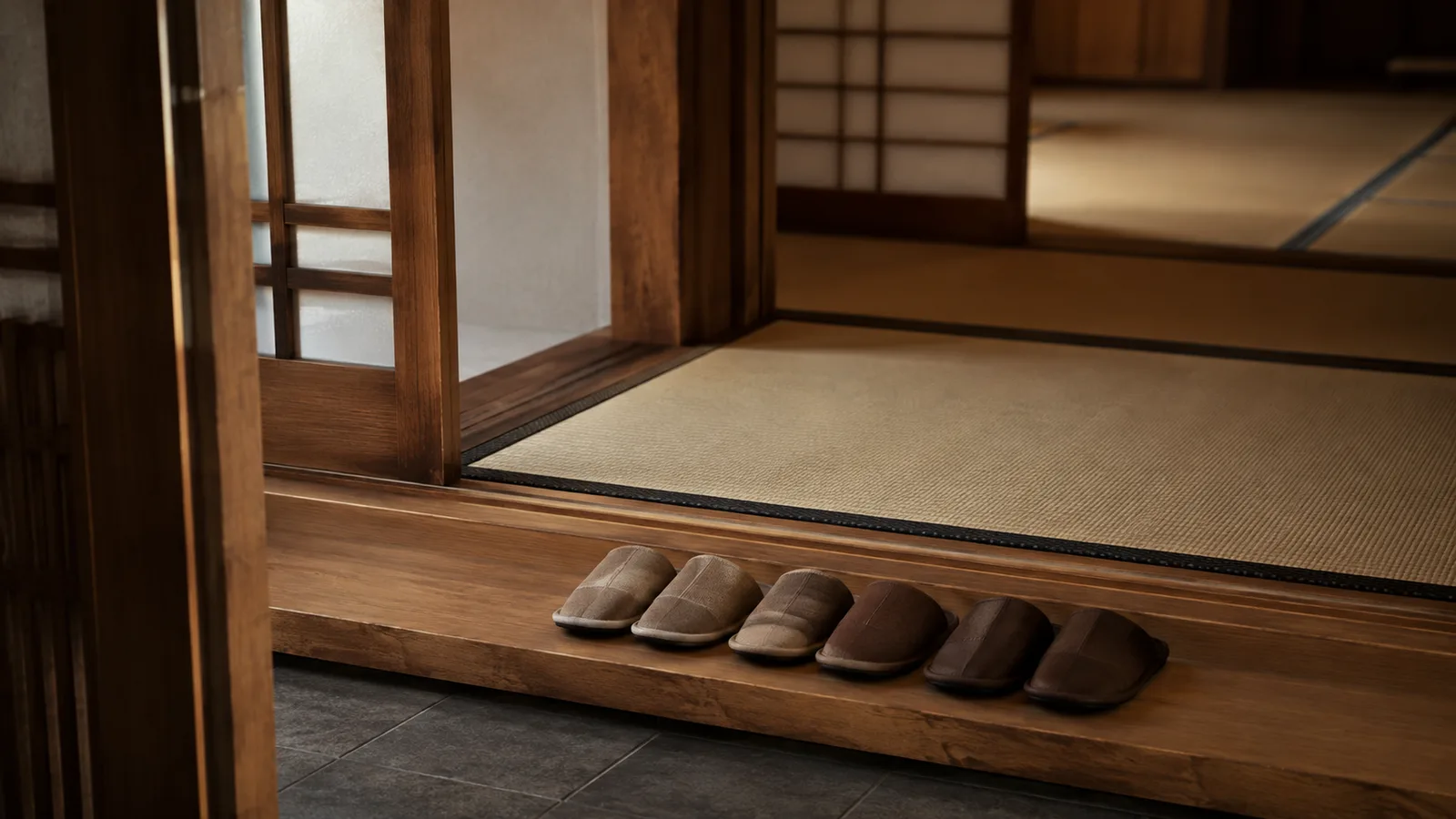
- Remove your shoes at the entrance and switch to the indoor slippers provided.
- Take off those slippers again before stepping onto tatami flooring or into the bathroom, where separate bathroom slippers are usually provided.
- Wear your yukata as instructed by the ryokan—some allow it in nearby streets, many do not, so it’s worth asking.
- Follow ordinary bath etiquette: wash and rinse before entering the water, keep your small towel out of the bath, and soak without swimming or splashing.
- Tipping is generally not expected. Like most accommodations in Japan, ryokan don’t typically operate on a tipping culture, even for attentive service.
Bathing at a ryokan
Ryokan baths generally follow the same shared-bathing customs covered in our guide to sento, onsen, and super sento: wash before you soak, no swimwear, and a quiet, unhurried pace once you’re in the water. Tattoo policies vary by property, so it’s worth checking directly with the ryokan before you book if this applies to you—see our guide to tattoos at a Japanese onsen for how to plan around it.
What a ryokan stay typically costs
Prices vary widely by property, season, room type, meal plan, and region. JNTO’s guide gives around ¥15,000 per person per night as a rough reference, but actual prices vary widely, and a figure like this can change over time. Because the rate often includes dinner and breakfast as well as the room, it’s worth checking exactly what’s included when you book, and confirming current rates on the ryokan’s own official website.
Choosing your first ryokan
For a first stay, it helps to check a few basics before you book: the location and how easy it is to reach, whether dinner and breakfast are included, whether the bath is shared, reservable-private, or in your own room, whether the bedding is a Japanese-style futon or a Western-style bed, the property’s tattoo policy and other house rules, and what the ryokan’s own official website says about all of the above. Checking these details in advance is the most reliable way to know what to expect.
Not sure which region to visit? Our guide to Japan’s onsen towns covers four well-known destinations to start planning around. And once you’ve picked a property, how to actually book a ryokan in English walks through which sites work and what to expect on the booking page. And if you’re eyeing a cherry-blossom-season stay, timing the booking matters as much as picking the property—see when to book a ryokan for a spring trip.
To see what that checklist looks like filled in, here’s one bookable example: a six-room inn in Gora, Hakone, with indoor and open-air hot-spring baths that are private rather than shared, and staff reviewers describe as multilingual—which covers three of the questions above in one property. Its listing also states that it accepts guests with tattoos; as our tattoo guide explains, that’s set property by property, so it’s a reason to look at this one rather than an assumption to carry elsewhere. Room types and meal plans differ, so check what your rate includes before you book.
See this Hakone ryokan on KlookThis page contains affiliate links. If you book through them, AHH, JAPAN may earn a commission at no extra cost to you.
A gentle first stay
None of this needs to feel like a test to pass. Ryokan staff are used to first-time guests, and the point of the stay is to relax, not to perform the customs perfectly. If you’re ever unsure about a yukata, a bath, or a mealtime, asking at the front desk is exactly what it’s there for.
In closing
A ryokan offers a different rhythm than a hotel stay: an earlier check-in, a proper dinner, a lingering bath, and a night on a futon under a quiet roof. Rules and amenities vary from property to property, so it’s always worth checking a ryokan’s official site before you go.
Take it slow. Ahh…
Some editorial images in this article were AI-generated and do not depict specific venues.