Ryokan or hotel for the first night of a Japan trip? Most guides answer this by listing amenities — futons versus beds, shared baths versus private ones. That’s not actually the decision. The real question is who you want planning your evening: the inn, or you.
Who plans your evening
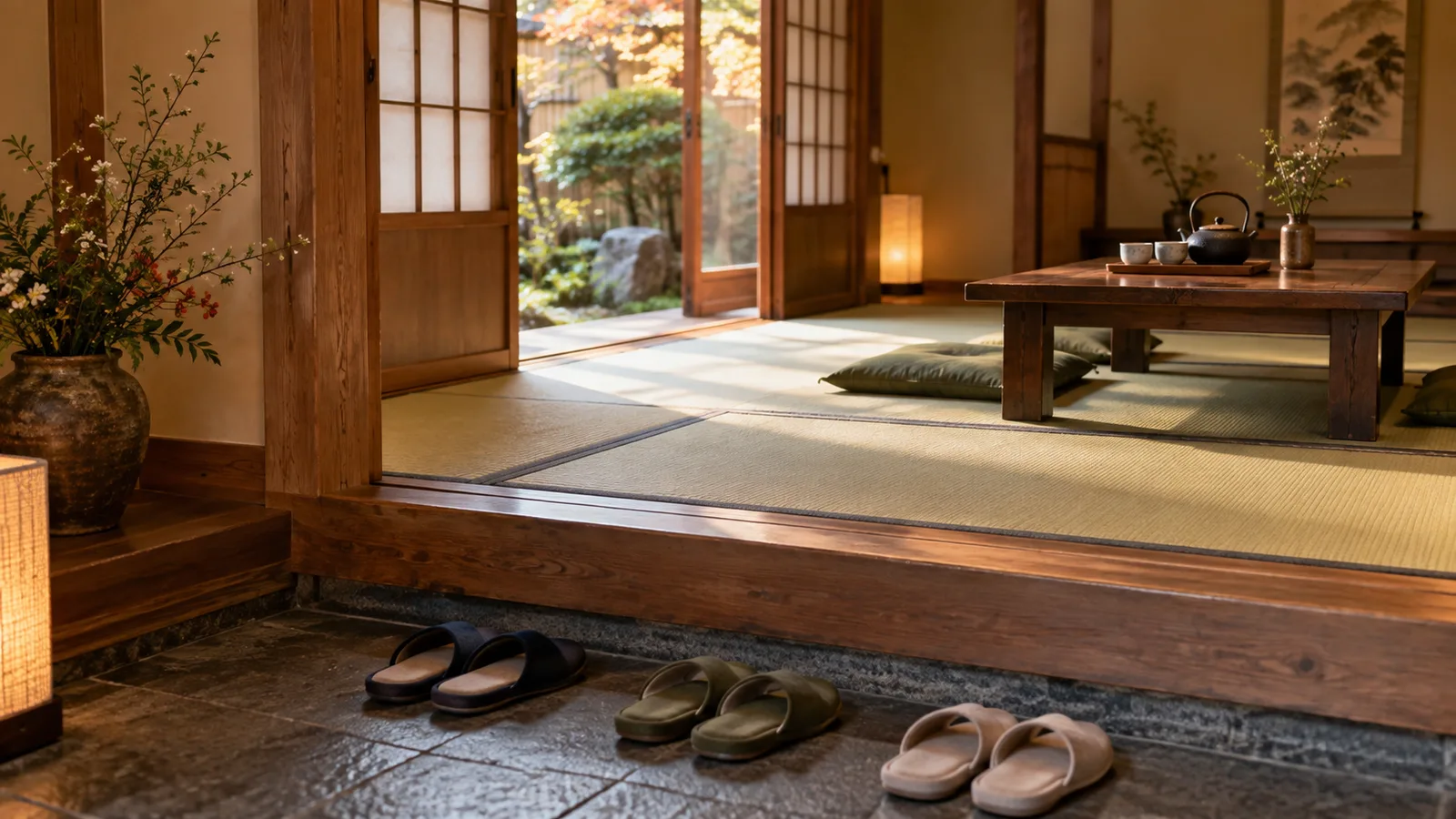
A ryokan stay is a sequence the inn has already worked out for you: a set arrival window, a multi-course dinner at a set time, a bath before or after it, and futon bedding laid out on the floor while you’re away from the room. You’re not choosing a restaurant, deciding when to eat, or making the bed. A hotel stay hands you the opposite: a room and a key, with everything else — when you arrive, where you eat, what time you go to bed — left for you to decide. Neither approach is better. They solve different problems, and the right one depends on what kind of evening you actually want after a day of travel.
What points toward a ryokan
A ryokan tends to fit better when several of these are true at once:
- You’re staying somewhere the bath itself is the point — an onsen town rather than a transit hub.
- You can commit to arriving in the afternoon rather than late at night, since dinner is usually served at a set time.
- You don’t mind a fixed dinner hour and a set menu, rather than choosing a restaurant on the spot.
- You’re comfortable sleeping on a futon on tatami flooring instead of a Western-style bed.
- You have at least one evening with nothing else planned, so the pace of the ryokan isn’t fighting your itinerary.
What points toward a hotel
A hotel tends to fit better when several of these are true instead:
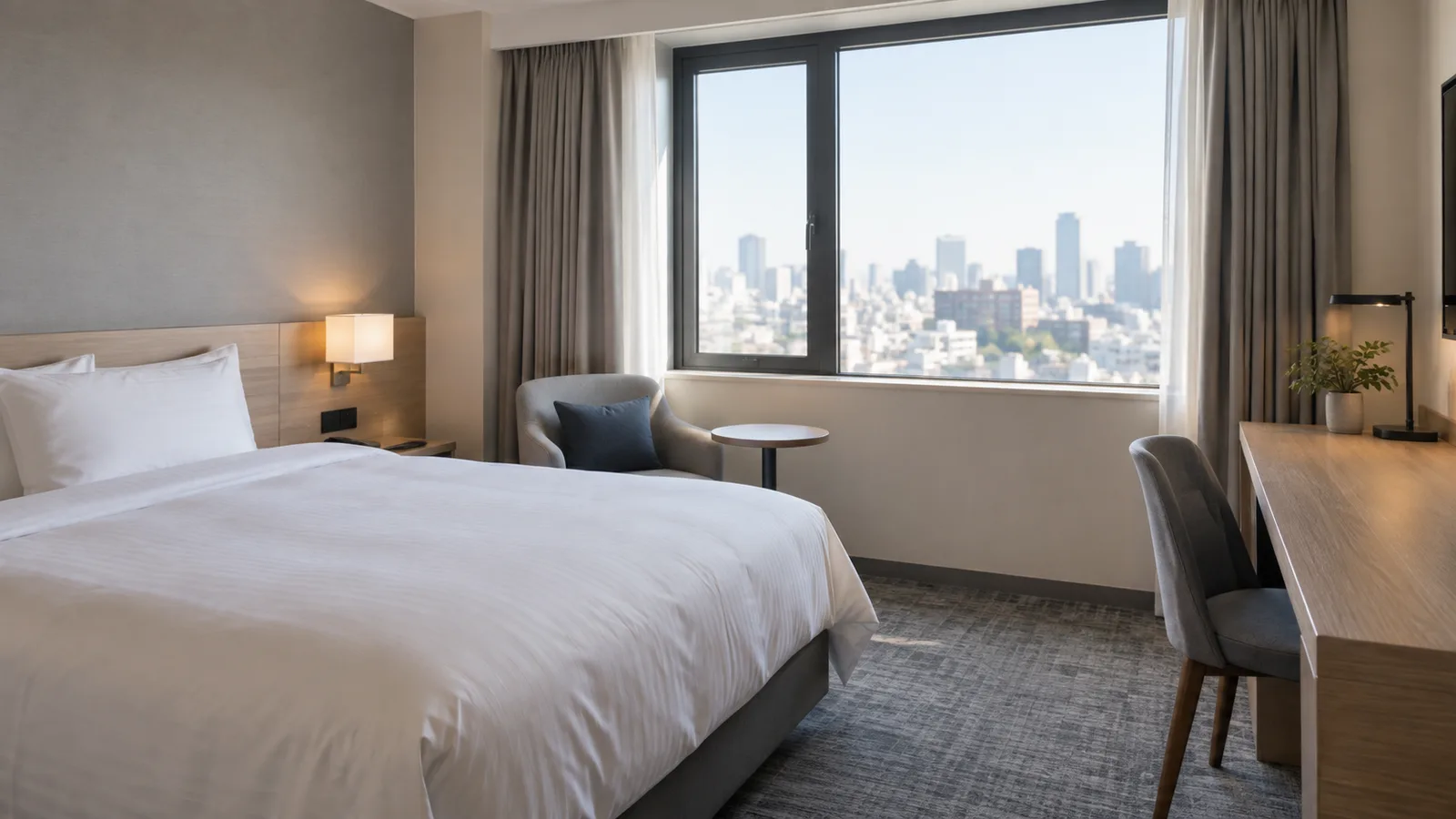
- You’re arriving late — off a delayed flight, a long train ride, or a full day of sightseeing — and don’t want to explain yourself to anyone at check-in.
- You want to eat wherever looks good that night, not on a set schedule.
- You’re staying several nights in the same city and want a base you can come and go from freely.
- You’re traveling with a lot of luggage, or stairs and floor-sitting aren’t comfortable for you.
- You haven’t decided your plans for the evening yet and don’t want the inn’s schedule deciding for you.
Where this framework breaks down
This isn’t a strict rulebook. Some ryokan offer room-only plans without dinner, which loosens the fixed-schedule part of the trade-off. Some city hotels are just as characterful as a ryokan, with their own baths and dining rooms. And the one constraint that holds up most consistently is timing, not taste: many ryokan set a fairly early afternoon check-in window and expect you by a certain time so the kitchen can serve dinner on schedule, which makes them a poor fit for a day that starts with a late flight or a delayed train.
You don’t have to choose one for the whole trip
You don’t need to book several ryokan nights to get the experience — one night is usually enough to see what the sequence feels like, and you don’t need to give up a flexible itinerary to do it. Plenty of travelers split a trip: hotel nights in cities where they want to move at their own pace, and a ryokan night somewhere the bath and the meal are worth building an evening around. Picking a ryokan for one night doesn’t commit you to it for the rest of the trip, and picking a hotel for your first night doesn’t rule out a ryokan later on.
If a ryokan sounds right for that one night, here’s what to expect once you’re there, and how to actually book one in English. Not sure which region to build that night around? Our guide to Japan’s onsen towns covers four well-known options.
To see what a ryokan night on this checklist actually looks like booked, here’s one real example: Yoshiike Ryokan in Hakone-Yumoto, a hot-spring ryokan with tatami rooms and on-site bathing, listed in English on Klook. It’s one property, not a personal recommendation — use it to see the shape of a booking (arrival window, room type, what’s included) before you search for one that fits your own dates.
See Yoshiike Ryokan in Hakone on KlookThis page contains affiliate links. If you book through them, AHH, JAPAN may earn a commission at no extra cost to you.
A first-night decision, not a life sentence
Whichever you pick, it’s a choice about one evening, not a verdict on how to travel. Ryokan staff are used to first-time guests who aren’t sure about the routine, and hotel front desks are used to travelers who just want to drop their bags and go. Ask if you’re unsure — that’s what the front desk is for either way.
Either way, you’ll land somewhere warm. Ahh…
Some editorial images in this article were AI-generated and do not depict specific venues.