If a ryokan stay is on your Japan itinerary, dinner is often the part people know least about. You’ve booked a room, and somewhere in the confirmation it says “kaiseki”—a word that turns out to mean a long, quiet sequence of small seasonal dishes rather than a single plated meal. This guide walks through what kaiseki is, the shape a meal usually takes, and the few practical things worth sorting out before you sit down.
The short answer
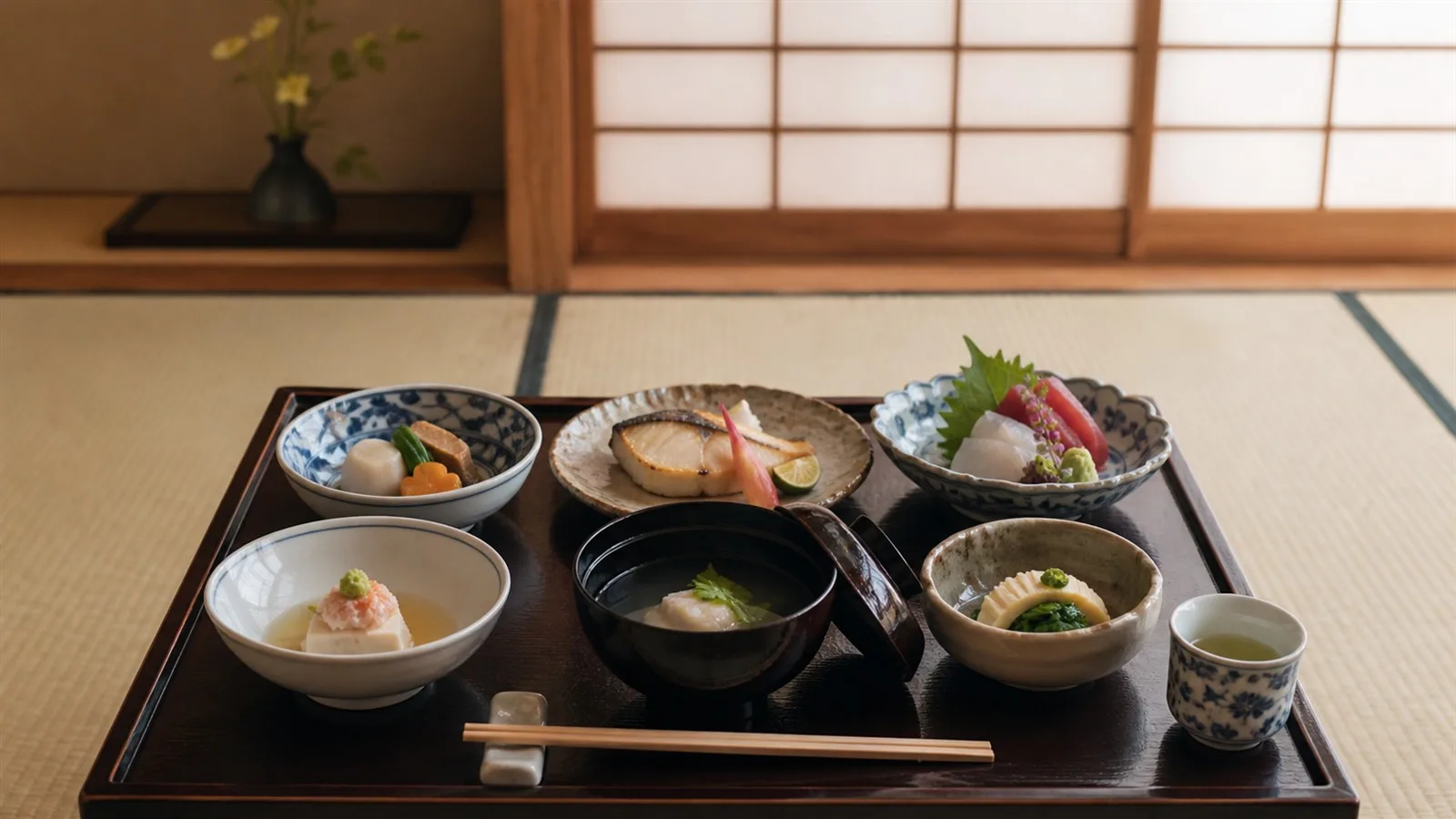
Kaiseki is a traditional multi-course Japanese dinner. Japan’s official tourism guide describes it as placing “a huge emphasis on seasonal ingredients as well as presentation,” where “each dish is a delicate balancing act of flavor, texture and color,” down to “the tableware each course is served on.” A meal is often built around grilled fish, a soup, and a rice course, but JNTO notes it is “certainly not limited to them.” Its feature on the cuisine describes most kaiseki as running to “about ten courses,” varying with the restaurant and the season.
There are actually two words that sound identical. JNTO’s longer feature on the cuisine explains that one written form “comes from the cultural tradition of tea ceremony and originally referred to a set of three small, simple dishes plus rice served before tea,” while “the other kanji means a get-together or banquet.” The banquet sense is the one you’ll usually meet at a ryokan: a full evening meal rather than a light course before matcha. In everyday English travel writing the distinction is often blurred, and for a first visit you don’t need to keep track of which is which.
Where a kaiseki dinner fits into a ryokan stay
At a traditional inn, dinner is usually part of the deal rather than an add-on. JNTO’s ryokan guide says a stay “typically includes a kaiseki ryori (formal, multi-course) dinner and traditional Japanese breakfast the next morning,” and that although “some ryokan offer stays without meals,” dining in-house “is considered an essential part of the experience.” Our guide to what a ryokan is covers the rest of the stay; this page is just about the meal.
Where you eat varies by property. JNTO notes meals are “presented in either a communal eating hall or in your room.” An in-room dinner means staff carry each course to a low table in your room; a dining-hall meal usually means an assigned table and a set start time. Either way the pace is set by the kitchen, not by a menu you order from.
You can also eat kaiseki without staying the night. In cities like Kyoto it’s served at dedicated restaurants and at ryotei, a formal style of traditional restaurant, where the menu is generally fixed and, as JNTO puts it, you “simply choose the number of courses you would like and allow the chef to take you on a Japanese culinary journey.”
The shape of a meal, course by course
Every kitchen sequences things its own way, but a full kaiseki dinner often moves through stages something like this. JNTO’s feature on the cuisine lays out one such progression:
- Sakizuke — a small opening bite, the kaiseki equivalent of an amuse-bouche.
- Zensai — a spread of starters; JNTO describes “about eight foods carefully displayed” on one dish.
- Owan — a bowl of clear soup, often considered a course where the kitchen shows its skill.
- Otsukuri — sashimi, a few carefully cut pieces rather than a large platter.
- Yakimono — a grilled course, “the main dish of grilled fish or seafood.”
- A changing dish — a course left open for the chef, sometimes a simmered or fried item.
- Hashiyasume — literally a “chopstick rest,” a light palate refresher between richer dishes.
- Shiizakana — “another main dish—this time meat.”
- Shokuji — the rice course, served near the end with “miso soup, and pickles.”
- Mizugashi — fruit or a simple sweet to close.
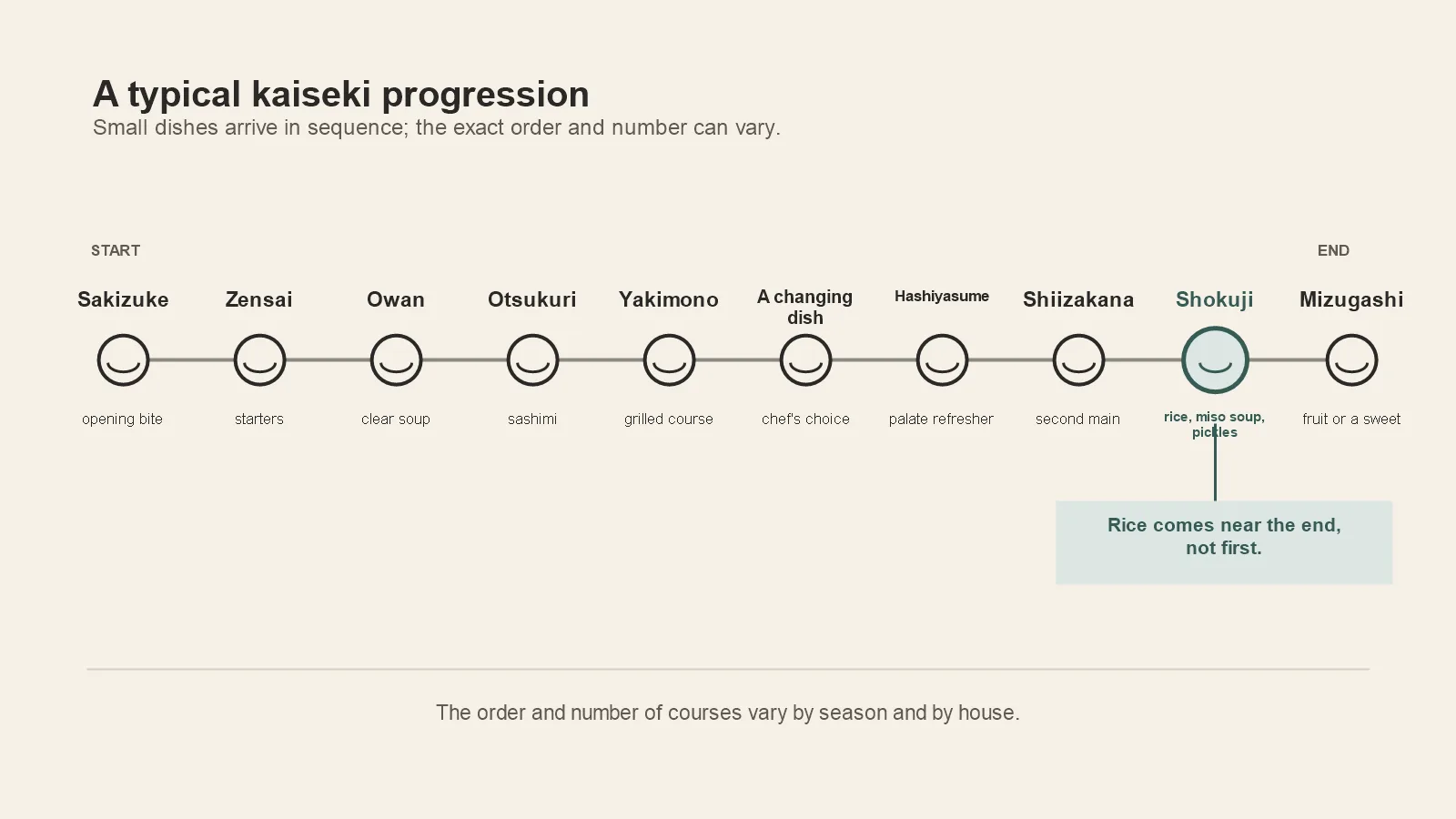
The order and the number of courses shift with the season and the house style, so treat this as a rough map rather than a checklist. The useful thing to know going in is that rice arrives late, not early: if you’re waiting for a “main,” you may already have passed it.
Seasonality is the whole idea
The reason kaiseki changes constantly is that it’s organized around shun—the short window when a given ingredient is at its best. The broader tradition it belongs to, washoku, was added to UNESCO’s Intangible Cultural Heritage list in December 2013 as “traditional dietary cultures of the Japanese,” with respect for nature and seasonality among the qualities Japan cited in its application. In practice this means a March dinner and a November dinner at the same ryokan can look almost unrelated, and that a dish you loved may not be on the menu if you return at a different time of year.
Tell the ryokan about allergies and foods you avoid — when you book
Kaiseki menus are prepared in advance, often around fish, dashi (a stock frequently made with bonito), and shellfish. If you have an allergy or don't eat certain foods, tell the ryokan when you reserve, not on the night. Some can adjust with notice; some cannot, and it's better to know early.
Because the meal is planned and shopped for ahead of time, last-minute changes are hard. Many ryokan ask about dietary restrictions on the booking form or in a follow-up email; if yours doesn’t, it’s worth sending a short message. Vegetarian, vegan, and religious dietary needs are increasingly catered for, particularly at larger inns, but it depends on the property and the notice you give.
How to eat it: pace, photos, and what to wear
There isn’t much to memorise. A few things that help a first dinner feel easy:
- Let the pace happen. Courses come when the kitchen sends them. There’s no need to finish everything at speed, and staff will usually wait for an empty dish before bringing the next.
- Yukata is fine. The cotton robe provided in your room is normal dinner wear at a ryokan. Our guide to the yukata covers how to put one on.
- Ask what something is. Staff are used to explaining unfamiliar ingredients, and it’s part of the meal rather than an interruption.
- Photos, quietly. A quick photo of a course is common; setting up lighting or filming at length reads differently. If a room feels hushed, follow the room.
- Hot towel, then chopsticks. You’ll often get an oshibori towel for your hands at the start; it’s not a napkin for the meal.
If the broader routine of a ryokan—baths, slippers, when to wear what—still feels unfamiliar, our step-by-step guide to sento, onsen, and super sento walks through the bathing side of the evening.
If you’d rather have the dinner and the room settled in one booking than assemble them separately, here is one example you can actually reserve: a fourteen-room inn at Yugawara Onsen in Kanagawa, roughly seven minutes by car from Yugawara Station on the Tokaido Line, whose listing describes authentic seasonal kaiseki with meals served in the guest room—the in-room version described above rather than a dining hall. It’s a small inn rather than a famous name, and it’s here because the kaiseki dinner is part of the stay rather than an extra. Raise any dietary needs when you reserve, as above, not on the night.
See this kaiseki ryokan stay on KKdayThis page contains affiliate links. If you book through them, AHH, JAPAN may earn a commission at no extra cost to you.
In closing
Kaiseki is less a meal to get right than a sequence to settle into: small seasonal dishes, arriving in an order the kitchen decides, with rice near the end and not much required of you beyond showing up in your yukata and taking your time. Sort out any dietary needs when you book, and let the rest unfold.
Course by course. Ahh…
Curious about YUGE, the character guiding you through this site? Meet YUGE—and find a few small ways to bring that calm home—on the YUGE page.
Some editorial images in this article were AI-generated and do not depict specific venues.