If a hot-spring stay is on your Japan itinerary, there’s a good chance a folded cotton robe will be waiting on your bed when you arrive. That’s a yukata, and at a ryokan or in an onsen town it’s normal to wear it to the bath, to dinner, and out onto the street. This guide covers what a yukata is, how it differs from a kimono, where yours comes from on a trip, and how to put one on without second-guessing yourself.
The short answer
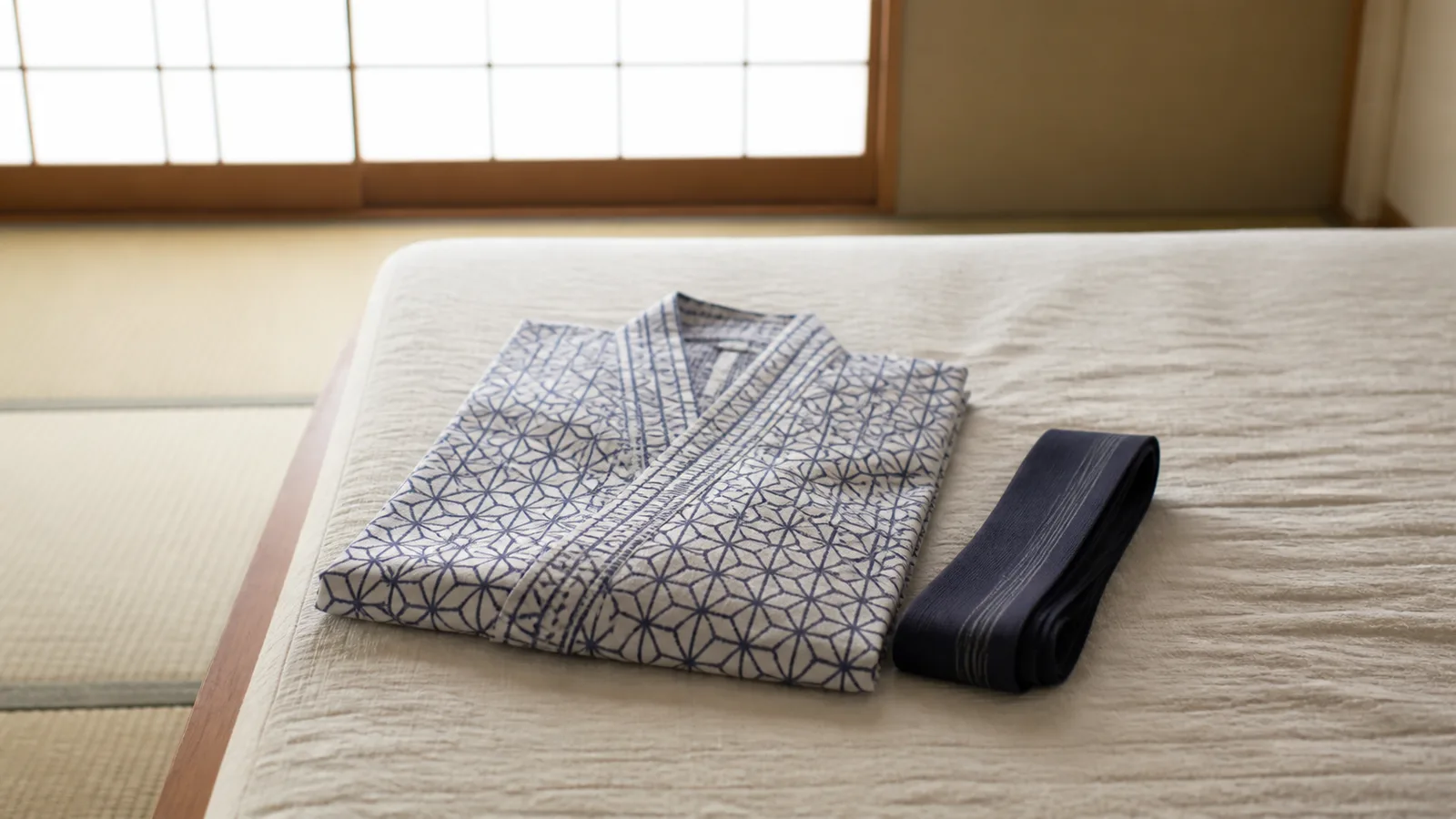
A yukata is a light, unlined cotton robe in the shape of a kimono. Japan’s official tourism guide describes yukata as “a type of simple kimono, typically made of thin cotton in bright designs that can be worn by men and women alike.” Because there’s no lining and none of the layering a formal kimono needs, a yukata is easy to put on yourself and comfortable in warm weather.
The garment has a long association with bathing. Japan’s National Diet Library traces the word yukatabira to a plain, unlined hemp robe that Heian-period nobles wore while bathing; as public bathhouses spread it shifted, in the library’s words, “from being underwear for bathing to loungewear after bathing,” changed from hemp to cotton around the turn of the 18th century, and in time became summer wear for evening strolls and firework viewing. That history is why the robe still turns up wherever people bathe: at ryokan, at public bathhouses, and along the streets of hot-spring towns in the evening.
Yukata and kimono: the everyday difference
People sometimes use the two words loosely, so a quick distinction helps.
- A kimono is usually made of silk or a heavier fabric, worn with an underlayer, a stiff wide obi, and often tabi socks and zori sandals. Dressing in one properly tends to need help.
- A yukata is cotton, worn against the skin or over light underwear, tied with a softer, narrower sash, and paired with bare feet in wooden geta. It reads as casual rather than formal.
For a traveler, the practical difference is simple: the yukata your inn provides is meant to be relaxed in, and you can manage it on your own.
Where your yukata comes from on a trip
You usually don’t need to buy or pack one.
- At a ryokan. Most traditional inns lay out a yukata for each guest to use during the stay. Japan’s official ryokan guide calls it “a cotton kimono-like robe donned by ryokan guests,” and notes that guests “will be invited to don geta or zori slippers and a yukata gown to wander” the grounds.
- In an onsen town. Where inns provide yukata, guests often take an evening stroll around town in them, moving between bathhouses in a cotton robe and wooden sandals. Day visitors who aren’t staying overnight can usually rent a set, including the sash and geta, from a shop in town.
- Buying your own. Yukata are sold at department stores and specialist shops in summer, if you’d like to take one home.
How to put one on
The steps below cover a standard yukata with a simple sash. If your ryokan includes a stiffer belt or a jacket-like haori over the top, the front desk can show you the order.
- Put the yukata on over your underwear, slipping both arms through the sleeves so the robe hangs evenly from your shoulders.
- Check the length. The hem should sit around your ankle. If it’s long, lift the whole robe at the waist and let the extra fabric fold down over the sash later.
- Wrap the right side across your body first, tucking it toward your left hip.
- Bring the left side across on top, so the left panel finishes on the outside. This left-over-right order matters (see the note below).
- Hold everything closed and wrap the sash (obi) around your middle two or three times, then tie it off. Women usually tie it at the waist; men tie it lower, at the hips.
- Smooth the front, adjust the collar so it sits a little away from the back of your neck, and you’re done.
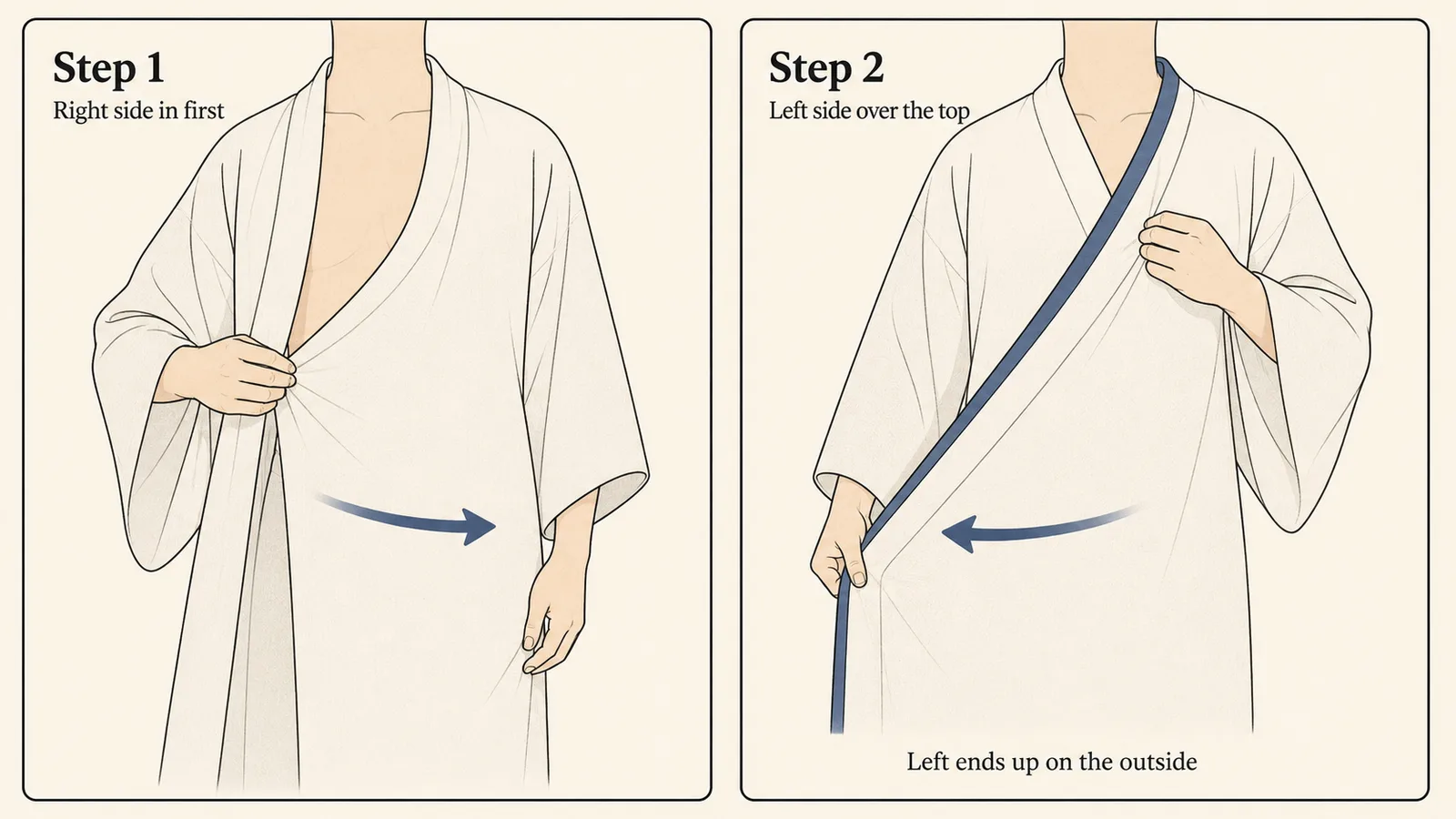
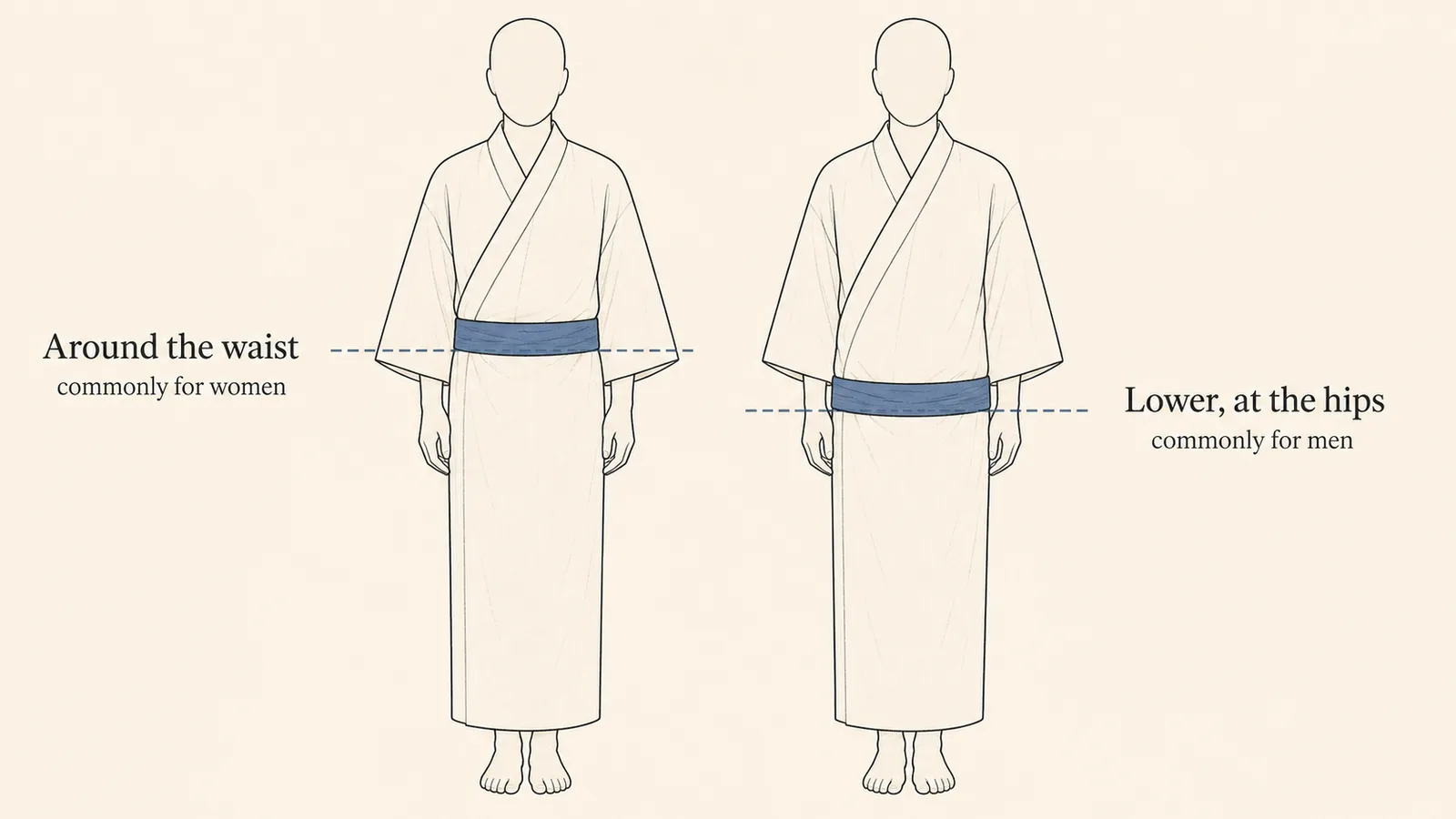
Wrap the right side against your body first, then the left side over it. The reverse, right over left, is the way a body is traditionally dressed for a funeral, so it's the one thing worth getting right. If you're unsure, ask at the front desk before you head to the bath.
Wearing it around the inn and the town
Once it’s on, a yukata is genuinely low-effort:
- To the bath. Wear the yukata to and from the bathing area, undress fully in the changing room, and put it back on afterwards. Ordinary bath etiquette still applies once you’re in the water; our guide to sento, onsen, and super sento walks through the sequence.
- To dinner and to sleep. At a ryokan the yukata doubles as loungewear and, for many guests, sleepwear.
- Outside. Wearing a yukata in the street is expected in many hot-spring towns, but some inns prefer guests keep it to the building and the garden. It’s worth asking, as our guide to ryokan also notes.
- Keep it closed. Hold the front together when you sit or bend, and let the geta do their slow, unhurried walk.
If you’re still deciding where to go, our guide to Japan’s onsen towns covers four well-known destinations where an evening yukata walk is part of the routine.
Beyond the inn
Yukata aren’t only for bathing. They’re common summer wear at fireworks displays and festivals, and Japan’s official tourism guide describes them as “just as acceptable on the beach as at a summer festival or even a stroll to the shops,” sometimes finished with a folding fan tucked into the sleeve. If you enjoy wearing the one at your inn, a festival yukata is the natural next step.
Want the styled version rather than the loungewear one from your inn? Rental shops in Kyoto dress you properly and let you keep the outfit for the day. This one has been at it a long time and has staff who work in English. Two things to be clear about: what you book is a kimono rental, and whether a lighter summer yukata is available depends on the season and the shop’s stock—so check the options on the booking page rather than assuming. It only makes sense if Kyoto is on your route.
See the Kyoto kimono rental on KlookThis page contains affiliate links. If you book through them, AHH, JAPAN may earn a commission at no extra cost to you.
In closing
A yukata is just a simple cotton robe with a long connection to the bath. On a hot-spring trip you’ll rarely have to think about it: one is provided, it goes on in a minute, and the only rule really worth remembering is left over right. Wear it to the bath, to dinner, and, if the town and your inn are fine with it, out into the evening.
Take it slow. Ahh…
Curious about YUGE, the character guiding you through this site? Meet YUGE—and find a few small ways to bring that calm home—on the YUGE page.
Some editorial images in this article were AI-generated and do not depict specific venues.